


15.1 Seebeck Effect; Thermocouples
- Seebeck Effect: When two different metals are joined to form a closed loop and their junctions are kept at different temperatures, an e.m.f. is produced in the circuit.
- This thermo e.m.f. depends on the temperature difference between junctions and the nature of metals.
- Thermocouple: A device made of two dissimilar metals used to measure temperature differences using Seebeck effect.
- Example: Copper-iron, copper-constantan thermocouples.
- Applications:
- Measurement of high temperature (thermometer).
- Power generation (thermoelectric generators).
15.2 Peltier Effect; Variation of thermoelectric e.m.f. with temperature; Thermopile
- Peltier Effect: When an electric current is passed through a junction of two dissimilar metals, heat is absorbed or released depending on the direction of current.
- Absorbs heat → Junction becomes cold.
- Releases heat → Junction becomes hot.
- Variation of e.m.f. with temperature:
- Thermo e.m.f. is not linear with temperature.
- For small temperature differences:
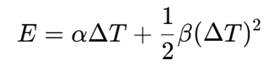
where α = Seebeck coefficient, β= temperature coefficient.
- Thermopile:
- Combination of many thermocouples connected in series or parallel.
- Used to increase sensitivity and measure small temperature differences.
- Also used to detect infrared radiation.
Important Short Questions and Answers in Short
Q1. What is Seebeck effect?
Ans: Production of thermo e.m.f. in a circuit of two dissimilar metals when their junctions are at different temperatures.
Q2. Define Peltier effect.
Ans: Absorption or release of heat at the junction of two different conductors when electric current is passed through it.
Q3. What is a thermocouple?
Ans: Device made of two dissimilar metals forming two junctions, used to measure temperature difference.
Q4. What is a thermopile?
Ans: Series/parallel combination of thermocouples used to increase sensitivity and detect small temperature differences.
Q5. Give one application of Seebeck effect and one of Peltier effect.
Ans: Seebeck – measuring temperature; Peltier – refrigeration and cooling devices.

